From The Field: A Closer Look At The Pantanal
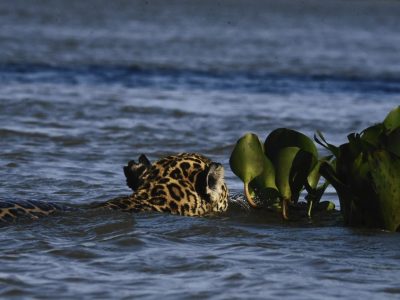
There is something about leaving the desk, crossing 145 km of dirt road, sitting in a boat before sunrise, or watching a jaguar a few metres away, free, in its own territory, completely indifferent to your presence. It reminds you why you decided to do this.
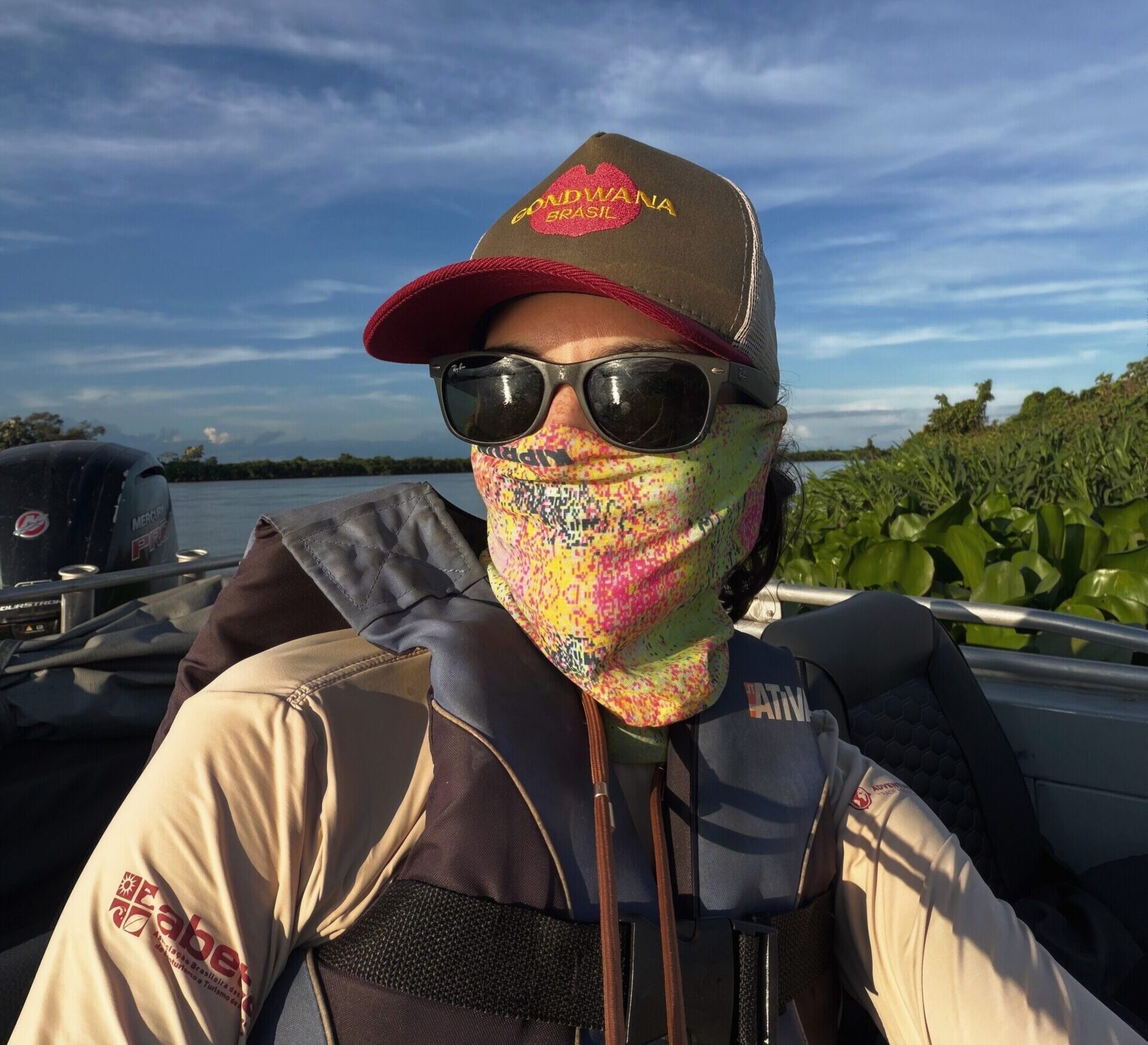
As Head of Product, Operations and Quality at Gondwana Brasil, being in the field isn’t a break from my job. It’s a core part of it. Testing the operation and understanding the product with the depth it deserves gives meaning to what I do every day. 10 days. 9 properties. An ecosystem that constantly delights you.
The Pantanal is the largest wetland on Earth, 150,000 km² of concentrated life. Jaguars, giant otters, tapirs, capybaras, deer, maned wolves, caimans, and more than 650 bird species. That’s the Pantanal on paper. What I lived goes far beyond what I saw on the river.
Porto Jofre: The Jaguar’s Turf
The journey started with a quick stop at Fazenda Piuval on the Transpantaneira, meeting up with Tristan and Jon from ATR Safari before setting off with our guide, Juan.
At Santa Rosa Pantanal Hotel—an intimate lodge looking over the Rio São Lourenço—the boat safari gave us sixteen different jaguars in a single day. Sixteen. Next door, Jaguar Bay has a simpler setup with a 10-metre observation tower giving another vantage point onto the landscape. We also checked out Hotel Pantanal Norte, which runs a specialized operation with a fleet of new boats. They’re adding 19 new boutique-concept suites soon to match the level of their service.
At Jaguar Camp, we found the human soul of Porto Jofre. Ailton Lara built the place around a bonfire on the banks of the Rio Cuiabá, complete with viola circles, Pantaneiro stories, and easily the best food in the entire region. You don’t remember it for its size, but for the warmth of the people running it.
The Transpantaneira: Brazil’s Wildlife Highway
The Transpantaneira (Highway MT-060) is a 145 km dirt road linking Poconé to Porto Jofre. With over 120 wooden bridges and caimans, capybaras, and birds right along the roadside, it really is a Brazilian safari.
At Araras Ecolodge, our guide Juan passed the baton to Max. Between trail walks and a night safari, we got full immersion. Meeting André, the owner who’s been here for fifty years and still talks about conservation with fresh energy, was a standout moment. Araras remains a benchmark for hospitality, giving us sightings of ocelots, tapirs, deer, foxes, and howler monkeys. I couldn’t visit Aymara Lodge this time, but it stays high on our radar. It’s the only property built specifically for wildlife watching from day one rather than starting as a ranch, tucked into dense forest instead of open country.
At Fazenda Piuval, the first stop coming from Cuiabá, we found 7,000 hectares of safari area—seven times the size of Araras—and the absolute best spot for giant anteaters. It just needs the right guide to unlock its full potential.
Baiazinha: The Perfect Closure
Not every part of the schedule followed a logical route, but closing the expedition at Baiazinha in the Cáceres region was special. Roberto Macedo guided us on the Rio Paraguai, sharing great stories and capturing incredible photos. After a bitterly cold afternoon with no jaguars, we returned with a bit of disappointment that vanished the moment we sat down to dinner. The food at Baiazinha is an attraction in its own right.
The next day brought warmer skies and a quiet river with very few boats. Nowhere else did the meeting of Cerrado and Pantanal feel so distinct, with wildlife that felt wilder and freer from the spotlight.
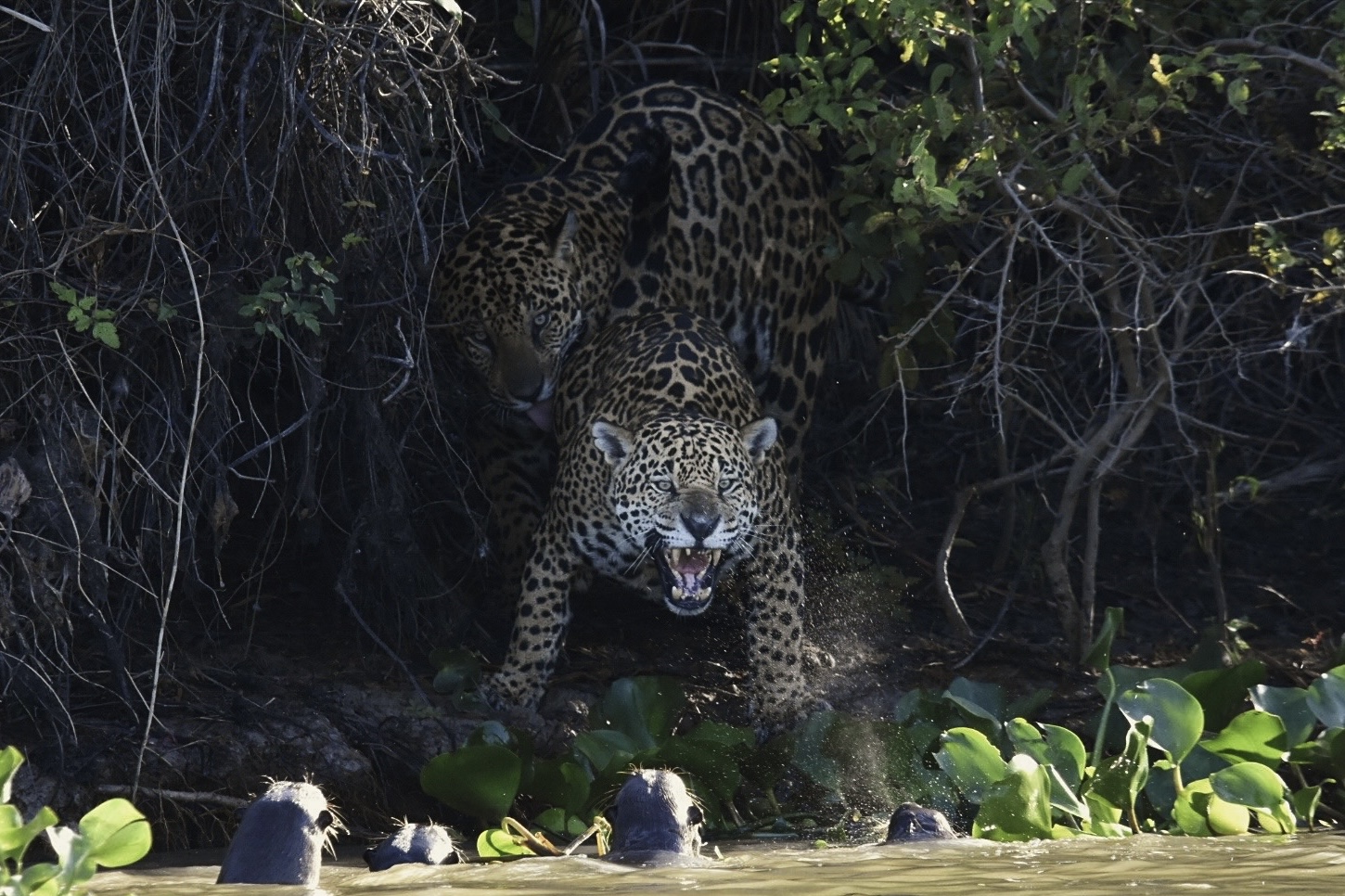
Then we witnessed something surreal: two jaguars facing off against a family of giant otters. Roars on one side, screeches on the other. Five of us in the boat, completely frozen in the moment. After a few minutes another boat approached, the fight broke off, and everyone went their separate ways. No guarantees on sightings out here, but when it happens, it leaves its mark.
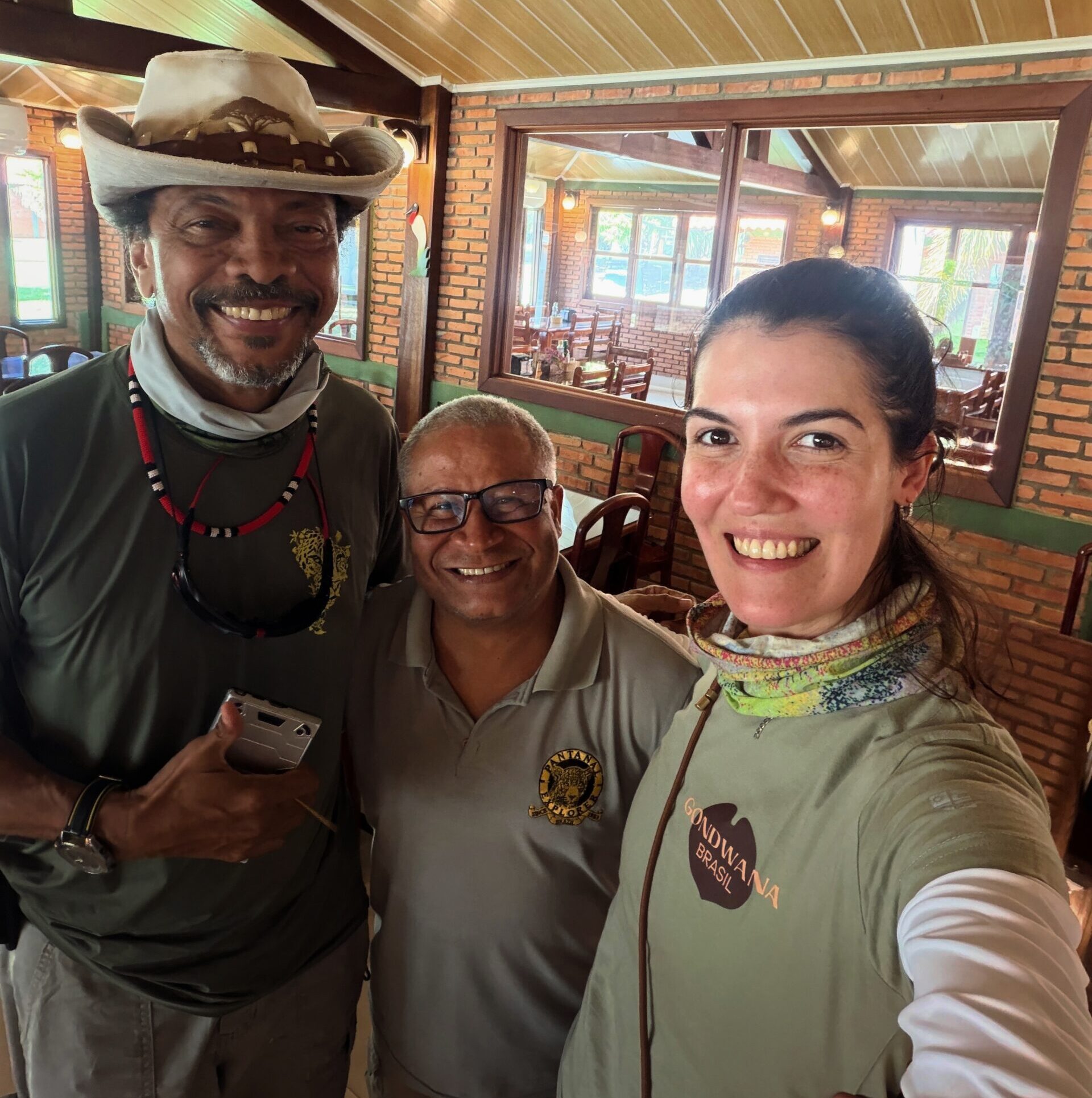
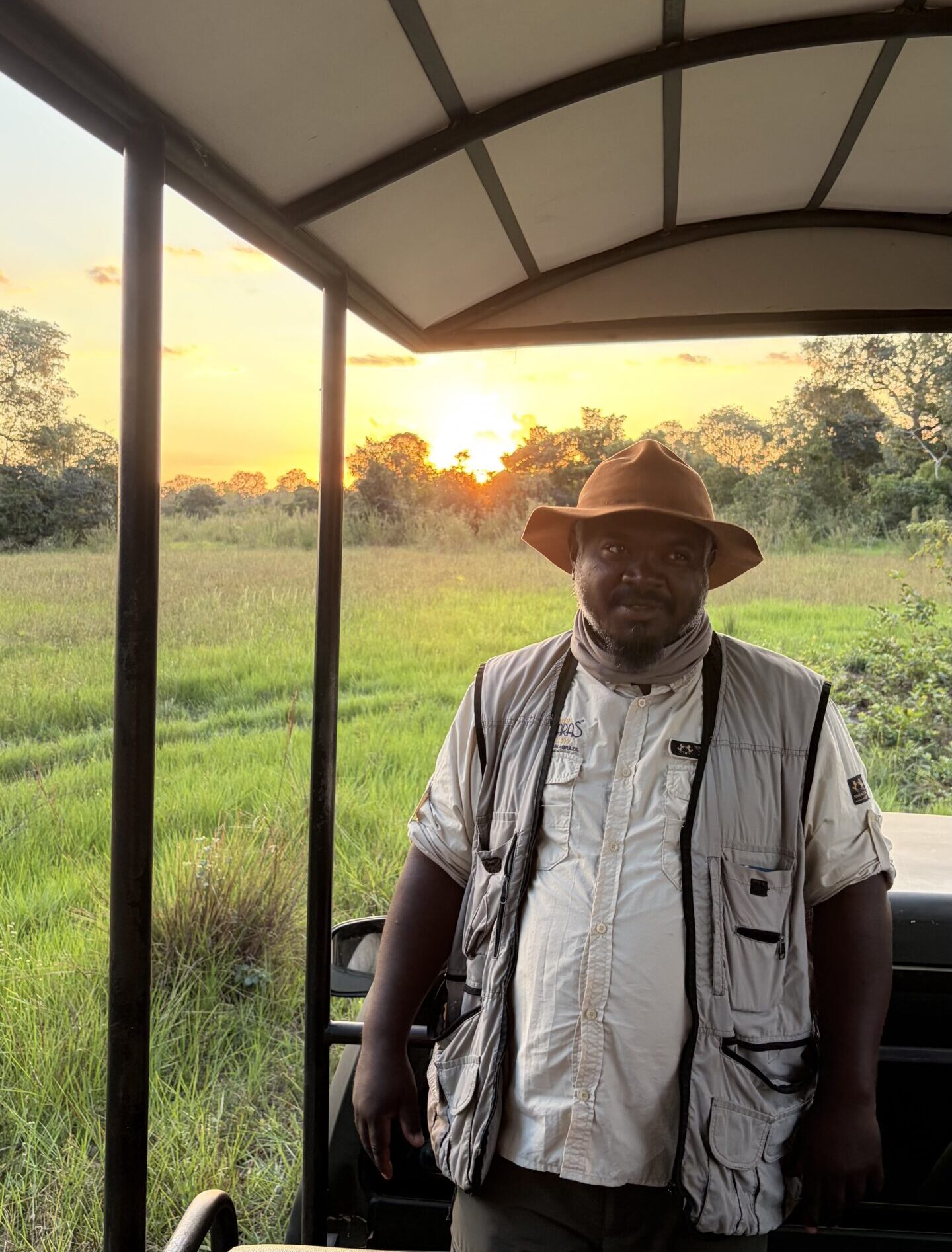
In Pantanal Norte, the guide isn’t an operational detail. They decide whether the trip is a tour or a journey. Juan anticipated needs before they were voiced and knew when to let silence do the work. Max, a quilombola, brought knowledge born from belonging and Pantaneiro culture in his blood. Roberto Macedo guided with the sharp eye of a photographer, catching moments that otherwise slip by. A great guide makes the difference between seeing the Pantanal and feeling the Pantanal.
Pantanal Norte is a mosaic of experiences. Responsible tourism is what keeps the biome standing, and when someone books a trip here, they’re casting a vote for the future of this place. Days like these remind me that product is never just what sits on a spec sheet. I came back with a detailed report, but also with something that no report can hold.
— Marina Gomes, Head of Product, Operations and Quality, Gondwana Brasil