At a Glance
Seven days | Six lodges | Pantanal Sul + Bonito
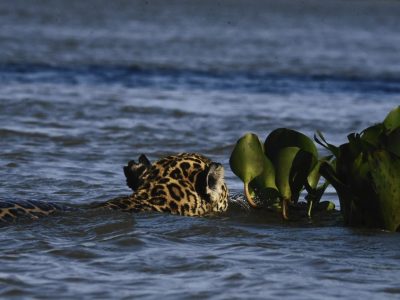
There is a moment, on a field trip, when it stops feeling like work. On this trip, that moment came on the very first night, at Refúgio da Ilha, on the banks of the Rio Salobra. We were walking to dinner when Maurício stopped us at the door. There was a jaguar near the lodge. We went out with flashlights. We found him a few metres from the trail: Trovão, an adult male already known to local researchers. He crossed the path ahead of us, stopped, looked at us for a few seconds, the kind of look that makes your heart skip a beat, and then carried on with his night as if we were not there at all.
That is the Pantanal in one scene. Over the following seven days, moving through six lodges in the South, I came home with a much clearer picture of what makes each property special.
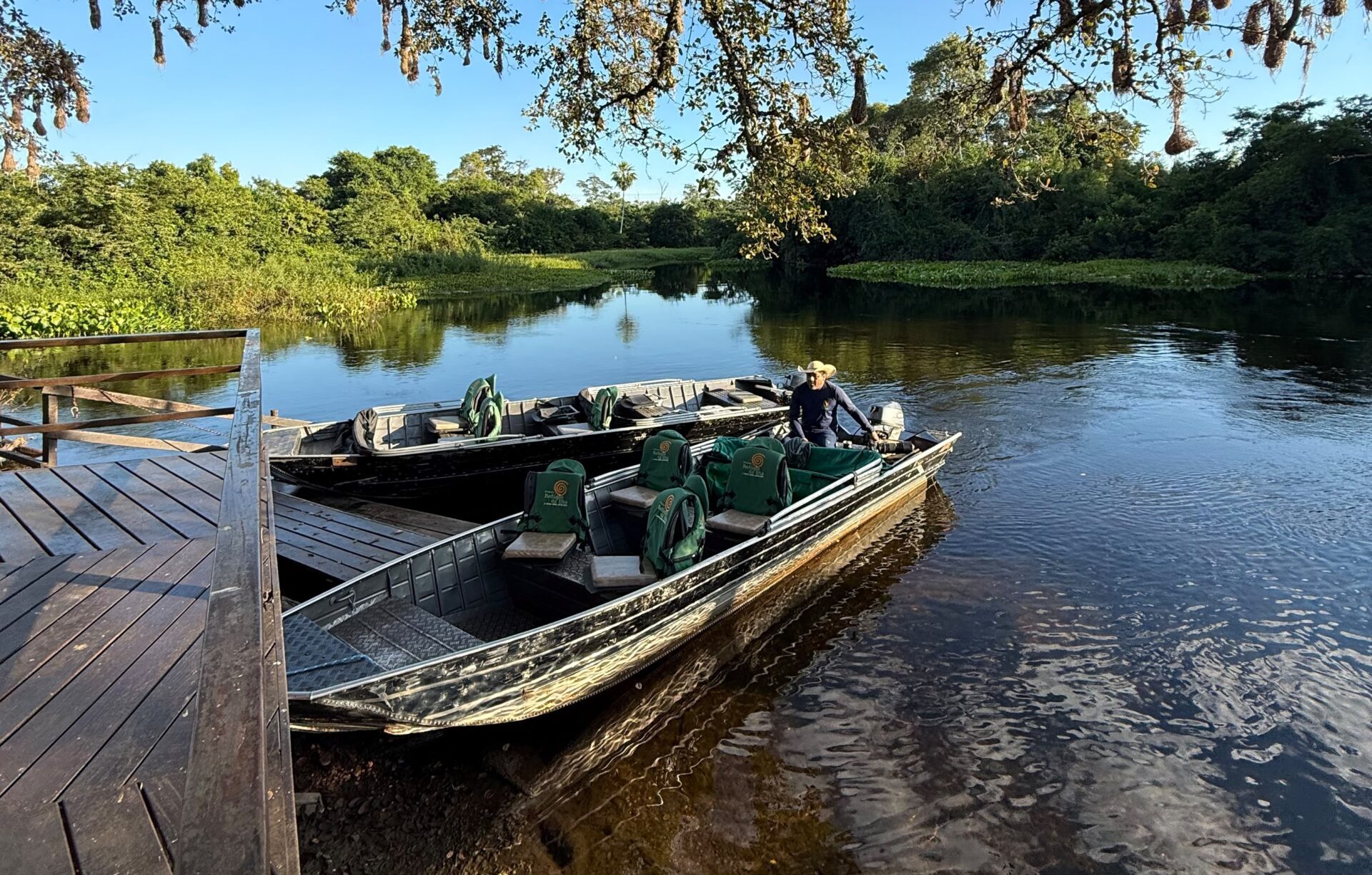
Refúgio da Ilha — a boutique hotel built around wildlife.
This is a small, family-run lodge, focused on ecotourism and nature conservation work in the Delta do Salobra area. What struck me most was the water: a full morning on the Rio Salobra, heading up to Baía Negra, with the Serra da Bodoquena in view, the water is so clear that I could watch fish moving under the boat before I even noticed the herons and ibis flying above it.
What made the biggest impression, though, was seeing how the family’s ecotourism project connects tourism, conservation, local pride, local culture and a real bond with nature. For travellers combining Bonito and the Pantanal, this lodge is a great fit. I would recommend it without a second thought to anyone who wants to feel that their trip is making a real, positive difference.
Nhecolândia — where time follows the rhythm of the water.
Before visiting the lodges in this region, there is one thing worth understanding about Nhecolândia: here, water is in charge. Every year, the floods move in over the pastures and reshape the land, and for generations, the people who live on these ranches have learned to move with that calendar, not against it.
Sitting at the table with these families, in the privacy of their home, not on a set itinerary, is a way to feel that connection that no safari photo can capture. Traditional recipes made only with what the ranch itself produces, sopa paraguaia, doce de leite, cheese, home-cured meats, along with tereré and stories passed down by the elders, are all part of a living heritage. This authenticity is not staged for visitors. It is simply life happening at its usual pace.
Getting here is already part of the experience. Nhecolândia sits in one of the most remote parts of Pantanal Sul, and for a few months of the year, its roads are taken over by water. For Barranco Alto, Barra Mansa and Baía das Pedras, especially between May and June, we strongly recommend flying at least part of the way. I have flown over this region a few times now, and it still gets me every time: looking down at this vast land, cut through by rivers, the Rio Aquidauana, the Rio Negro, the Vazante do Castelo.
 We arrived at Barranco Alto with that feeling still with us, the landscape lingering in our minds.
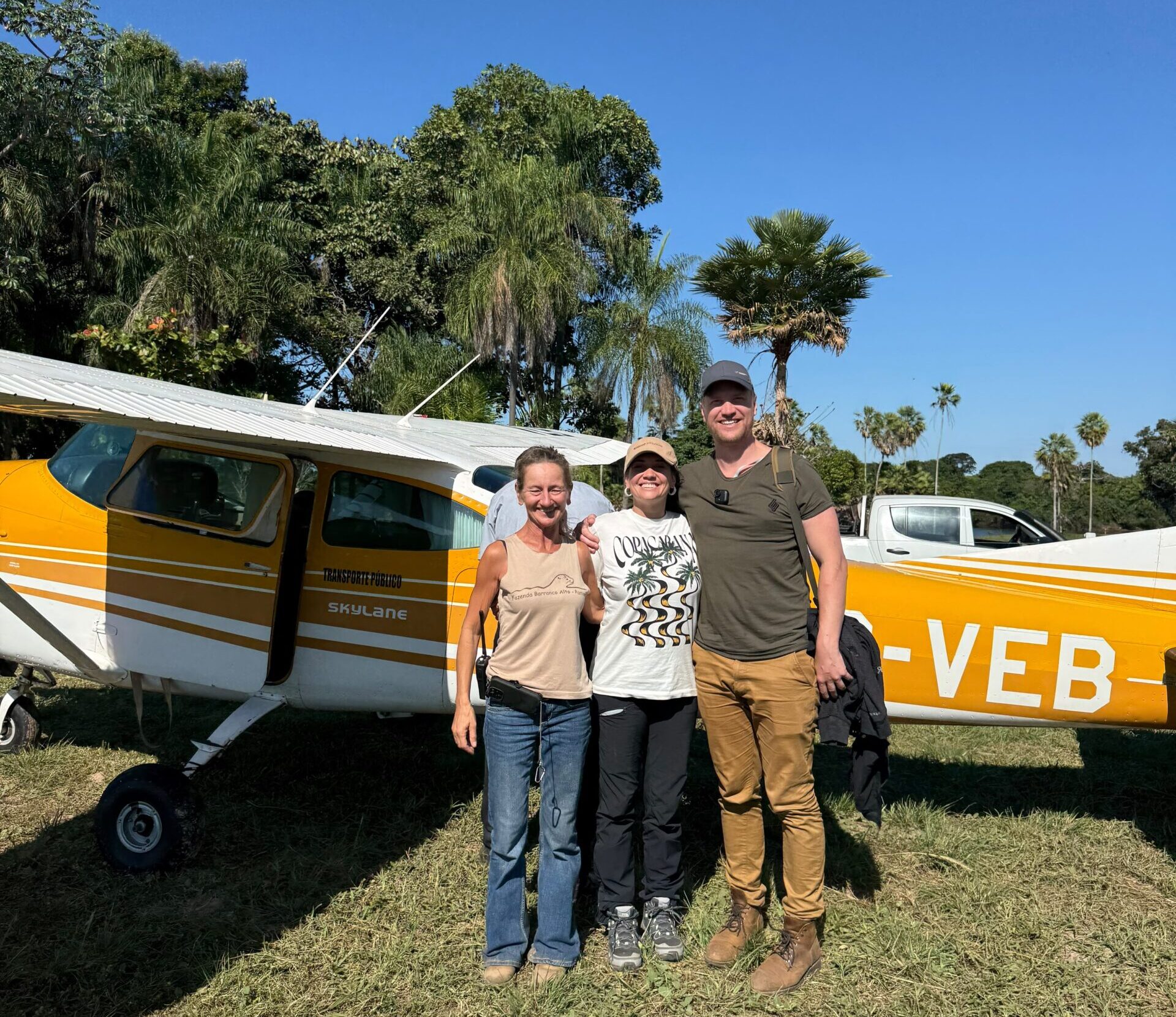 We arrived at Barranco Alto with that feeling still with us, the landscape lingering in our minds.
Barranco Alto — where everyone fits at the same table.
I did not expect the birdwatching at Barranco Alto to be this good. On a single outing, we found a jabiru pair on the nest, with hyacinth macaws and parakeets in the very same tree, the kind of sighting that usually takes days, and here happened in one morning.
The lodge sits on the banks of the Rio Negro and supports giant otter research and jaguar monitoring. But what really stays with your is something simple: this is a small, family-feel property where everyone eats together, at the same table. A small detail on paper, but one that sums up an entire philosophy of hospitality: intimacy over scale, conversation over protocol.
As Jonathan, from ATR Safaris, put it so well during the inspection: “The ideal size for a safari is one where everyone fits at the same table.” At Barranco Alto, that is not a concept — it is simply how things are done.
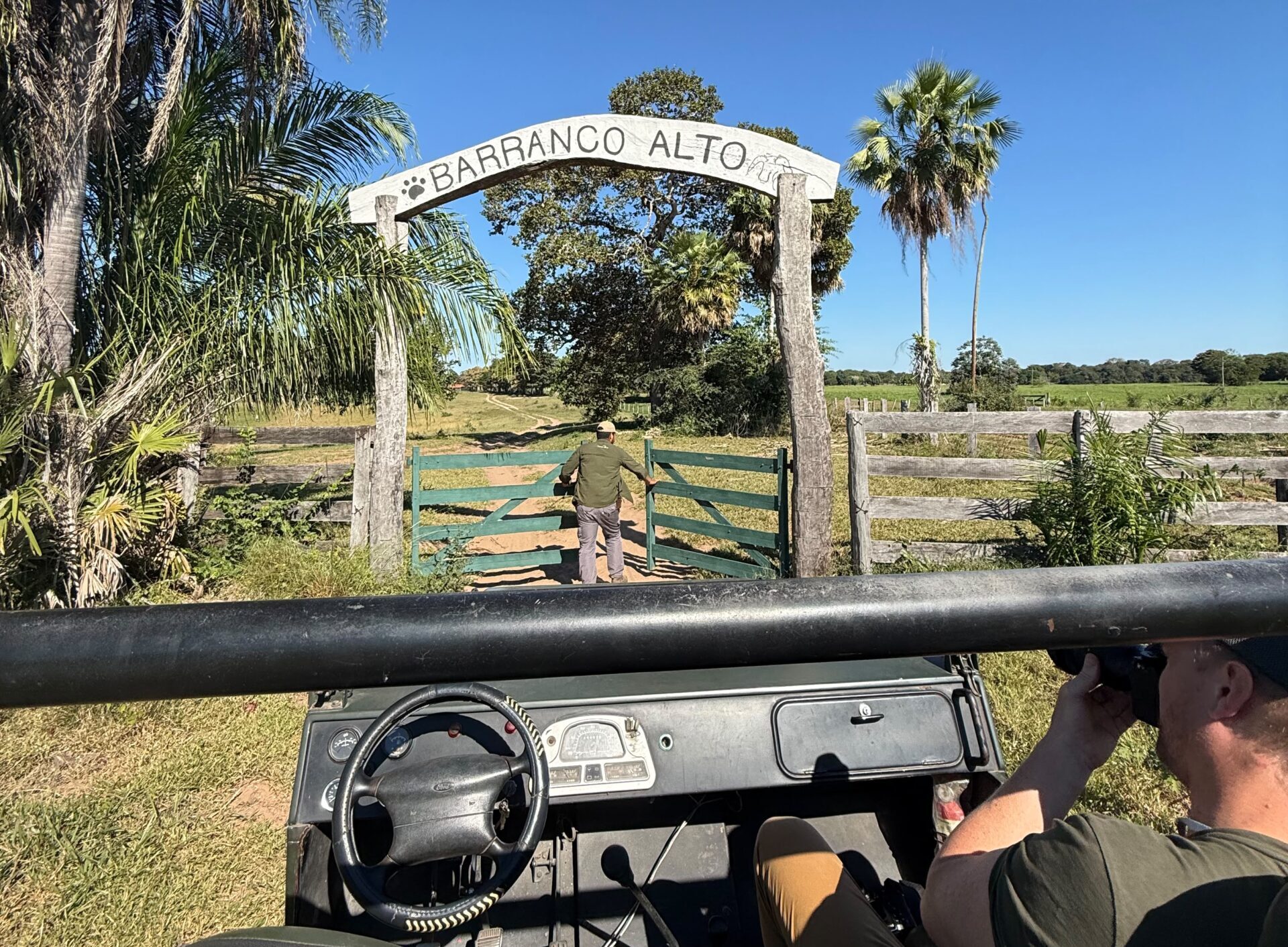 As Jonathan, from ATR Safaris, put it so well during the inspection: “The ideal size for a safari is one where everyone fits at the same table.” At Barranco Alto, that is not a concept — it is simply how things are done.
Barra Mansa — a lodge on the move.
In the same stretch of the Rio Negro as Barranco Alto, Hotel Barra Mansa has just finished a full renovation, and it shows: everything feels brand new. A new partnership with the O Canto group is also bringing a few more rooms nearby, opening later this year.
During the dry season, in July, August and September, the lodge offers a boat trip focused on jaguar watching on the Rio Negro, with lunch served on board. Land safaris go out in small groups, always following good wildlife-watching practice. When an animal shows up here, it feels like nature revealing itself on its own terms.
Baía das Pedras — the real story.
Baía das Pedras closed the day with one of my favourite moments of the trip: wine and snacks after a canoe paddle, with a stop on a lagoon so still it looked like glass, while the sky turned orange. Carlos and Rita are wonderful hosts, Rita herself leads the ranch’s safaris, driving the truck, with an energy and love for the place that is contagious.
The horseback rides here are some of the most beautiful I have ever done. The ranch also supports long-running tapir and giant armadillo research projects. But what makes Baía das Pedras special is that it is a real, working ranch, cattle, ranch hands, tereré, a wood-fired stove, cowboys, chickens, and none of it staged for visitors.
For those who want authenticity over polish, I cannot think of a better match.
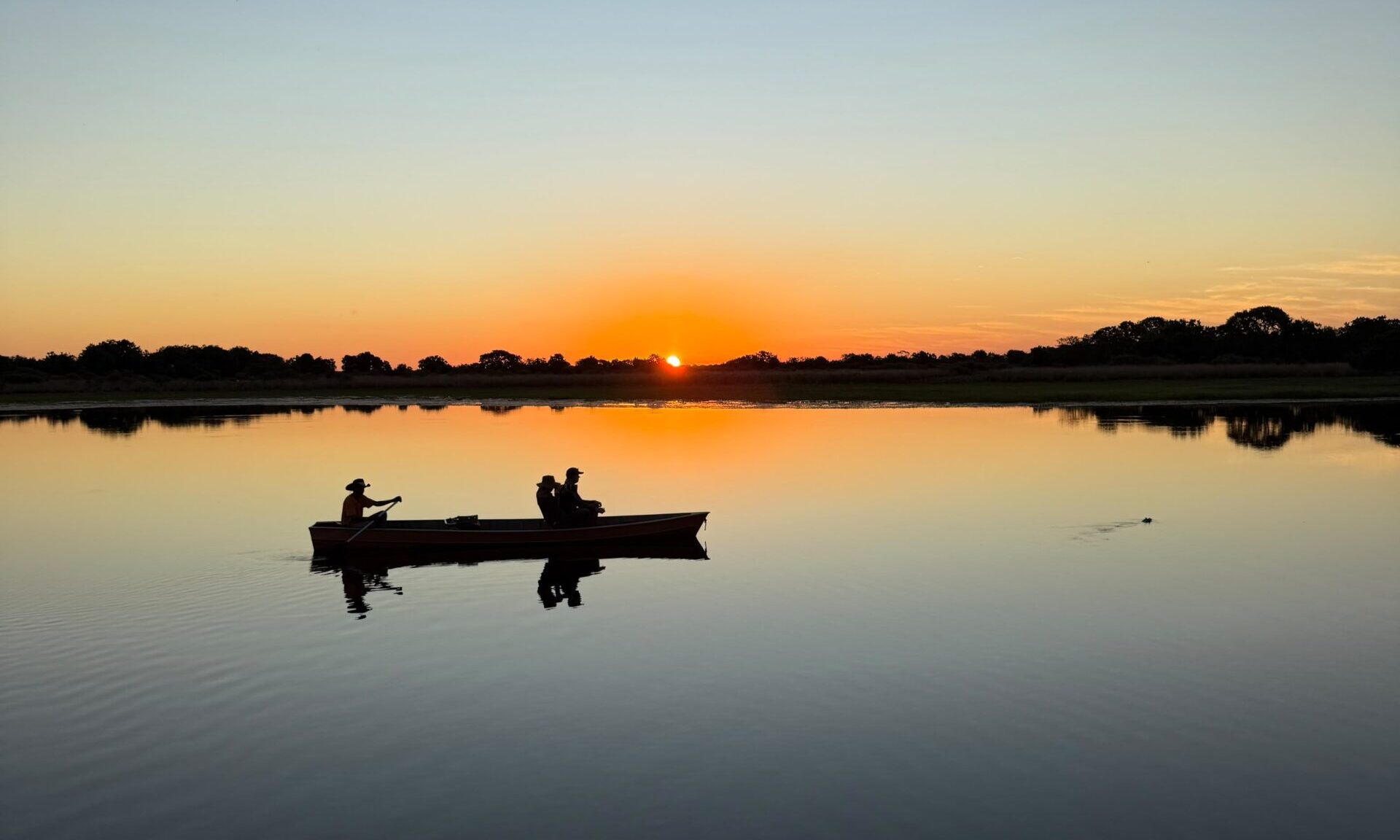 For those who want authenticity over polish, I cannot think of a better match.
 Aguapé and Pequi — giant anteaters, and much more.
Back in the Rio Aquidauana area, Aguapé is one of the best-known lodges in the region, with wildlife activity that never seems to stop. This is also one of the best places to see giant anteaters, on open ground that is very generous to anyone who wants to photograph them.
The lodge is home to a giant anteater rescue and research base and offers a talk about the species, its conservation and rescue work. Rooms here are simpler, but the food service is impeccable. Horseback riding, nature trails, canoeing and hands-on activities with the cattle also make this a very family-friendly place.
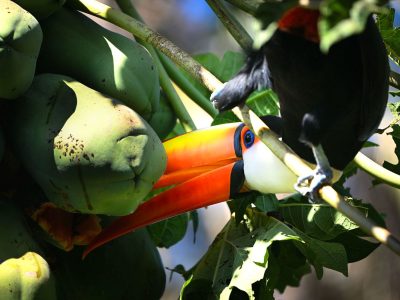
A little further on, Pousada Pequi has just been fully renovated: a warm, family-run place, with genuinely delicious home cooking built around the pequi fruit, traditional barbecue, and hosts who are around all day. Anteaters, toucans and hyacinth macaws are easy to spot here, while the traditional working ranch also opens up horseback riding and hands-on cattle work.
Photo by Jon Belt
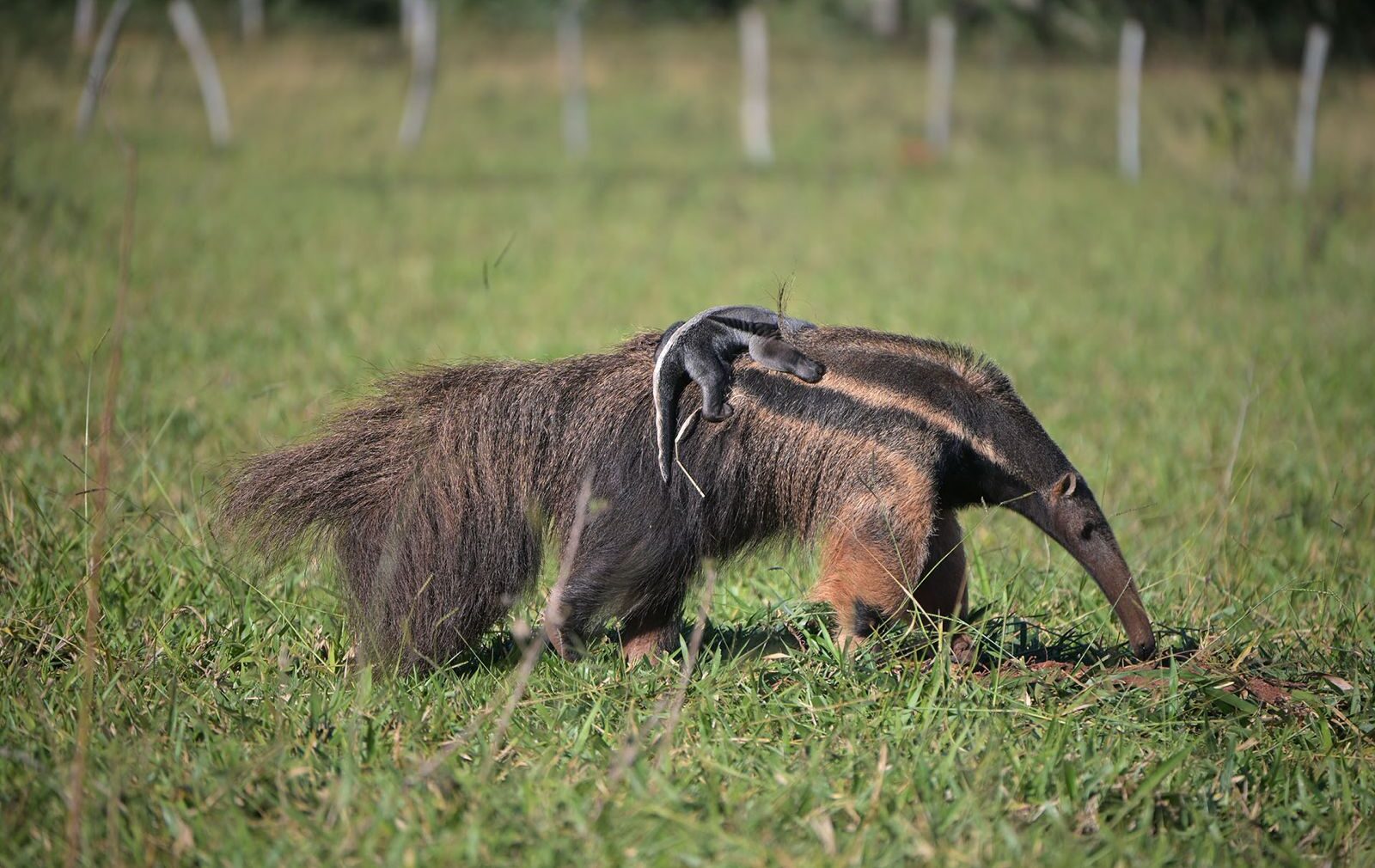 Photo by Jon Belt
Bonito — Boca da Onça, and a farewell gift.
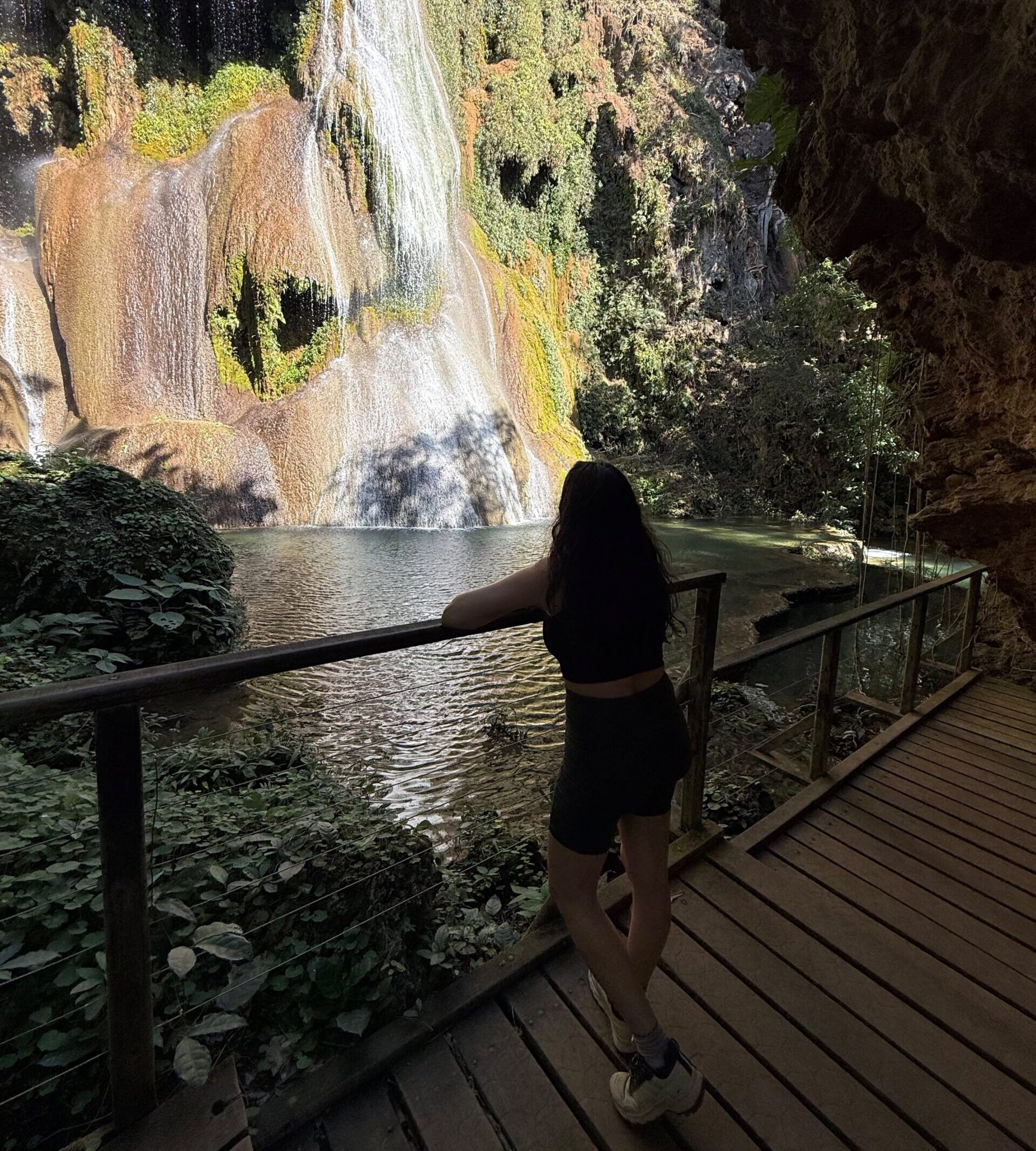
The day I left Pousada Pequi for Bonito turned into one of the most memorable of the whole trip. We did the Boca da Onça trail as a small private group, a beautiful waterfall and forest hike, with one of the tallest waterfalls in the state as its centrepiece. Going with a private guide made all the difference: we had the pace of the trail set just for us.
The best moment happened in one of the natural pools: we were swimming in clear water when a troop of capuchin monkeys came through the trees above us and stayed there, watching us for quite a while.
On the way back to Bonito, we stopped to look for giant anteaters with André, one of the best wildlife guides in the region. We found a giant anteater with a baby on her back, close enough to watch calmly, a moment that stays with you. We are already working on turning this anteater search into a proper product. For clients who want to photograph this animal, and for families who love wildlife, this is a genuinely valuable activity.
What seven days across six lodges taught us
The clearest lesson of the week: the Pantanal does not have just one story. Each of these lodges surprised me in a different way, and each one is the right answer for a different kind of traveller: the environmentally conscious one, the one looking for an authentic, family-style stay, or the one chasing the best possible wildlife photography.
A few ideas we are taking forward: serious nature-photography groups; combinations between the Pantanal and Bonito–Serra da Bodoquena; connections between Pantanal Sul and Pantanal Norte; and a way to bring the culture of the boiadeiro, the cowboy, the cattle drive, the tereré shared before a ride, to a traveller who has never set foot on a real working ranch.
Seven days, six lodges, one very clear conclusion: the Pantanal holds as many stories as it has rivers. Our job is knowing which one belongs to which traveller.